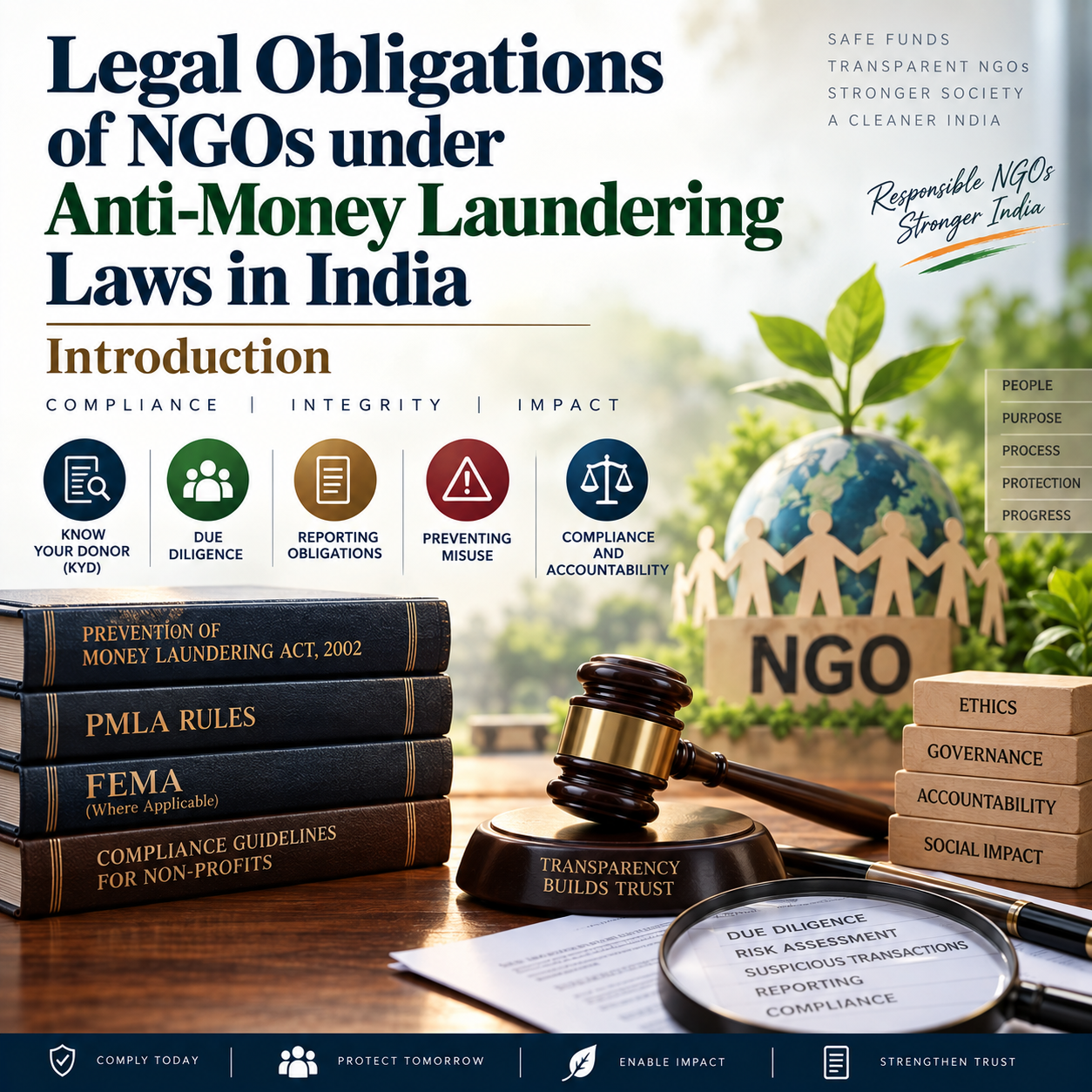





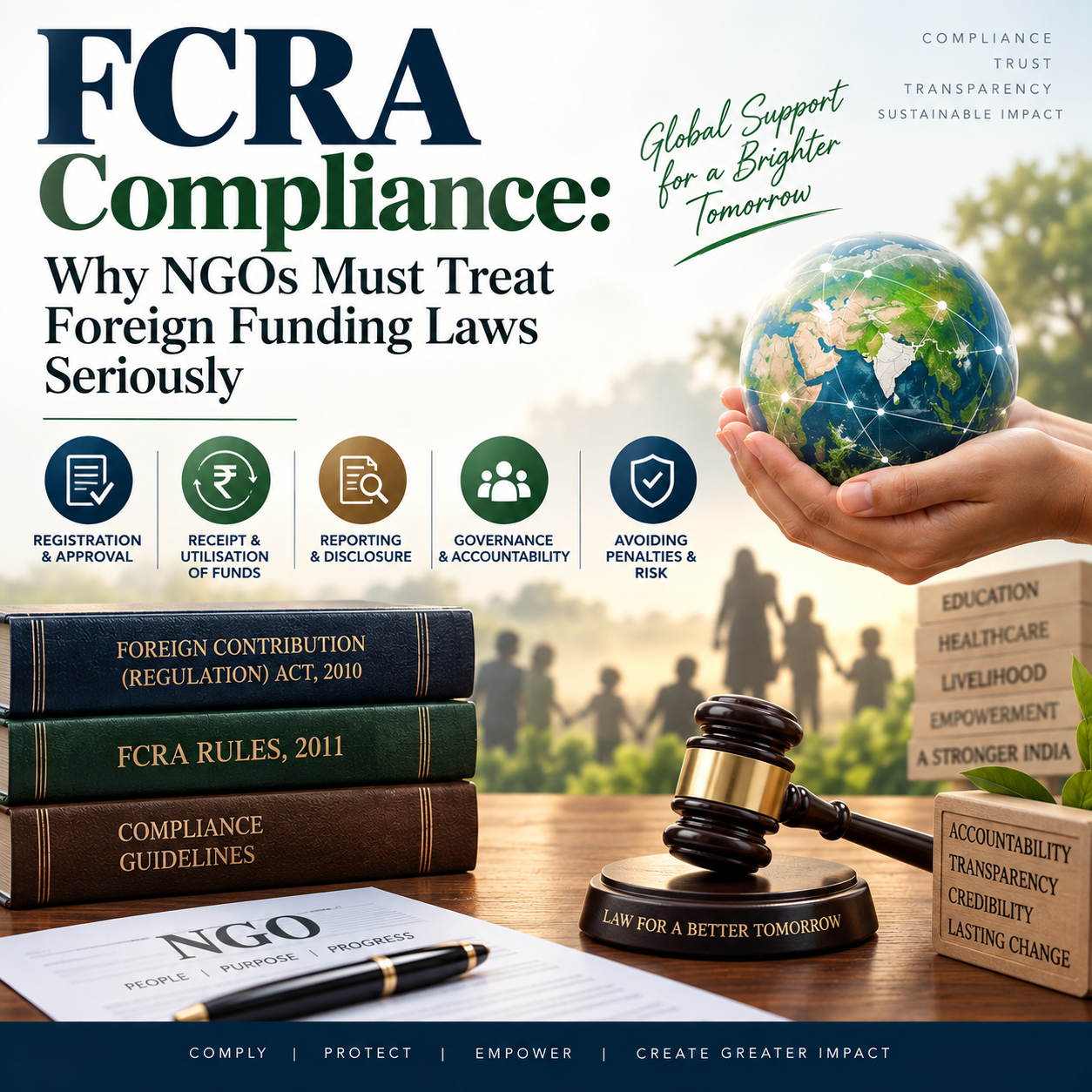
- India’s non-governmental organizations (NGOs) play a vital role in education, healthcare, women empowerment, rural development, environmental protection, disaster relief, and social justice. Many of these organizations receive financial assistance from foreign donors, international charities, philanthropic foundations, religious organizations, and development agencies. However, receipt and utilization of foreign donations in India is not unrestricted. It is governed by a stringent legal framework known as the Foreign Contribution (Regulation) Act, 2010 (FCRA).
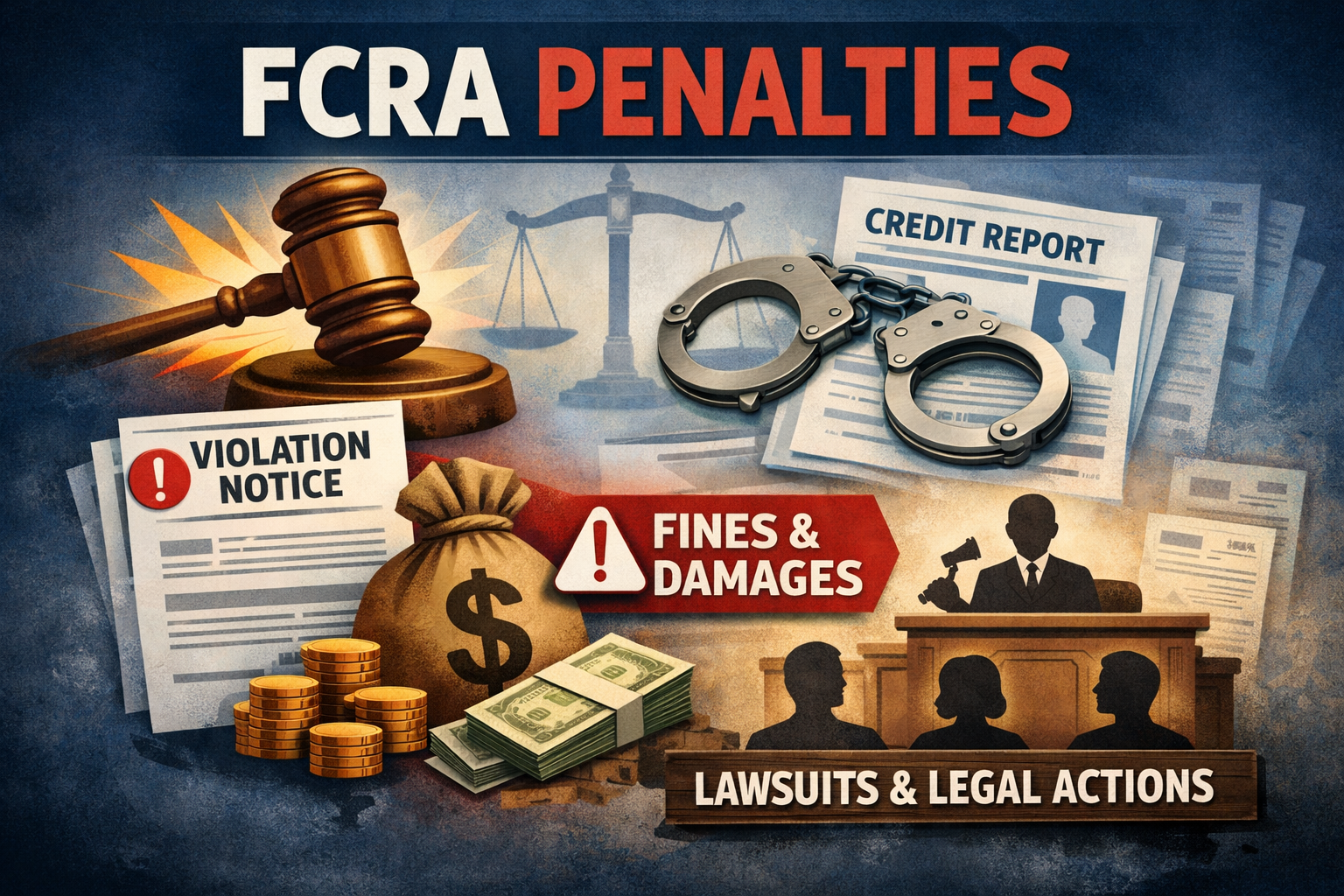
- In recent years, FCRA compliance has become one of the most closely monitored areas of NGO regulation in India. Thousands of organizations have faced suspension, cancellation of registration, freezing of bank accounts, and denial of renewal due to non-compliance with FCRA provisions. The Government has increasingly emphasized transparency, accountability, and national security concerns in regulating foreign contributions.
- The law has therefore transformed FCRA registration from a mere procedural requirement into a highly sensitive compliance obligation.
- Understanding the Objective of FCRA
- The principal purpose of the FCRA is not to prohibit foreign donations, but to regulate them. The Government seeks to ensure that foreign contributions are not used for activities detrimental to the sovereignty, integrity, strategic interests, public interest, or democratic framework of India.
- The underlying legislative concern is that foreign funding should not influence political processes, public policy, electoral systems, religious harmony, or national security.
- Thus, while genuine charitable activities are permitted, the law imposes strict conditions regarding:
- who may receive foreign contributions,
- how such funds may be utilized,
- where they must be deposited,
- how they must be reported, and
- the extent to which they may be administratively spent.
- What Constitutes “Foreign Contribution”?
- Under Section 2(1)(h) of the FCRA, foreign contribution includes:
- any donation,
- delivery,
- transfer of currency,
- foreign securities, or
- articles received from a foreign source.
- Importantly, the contribution may be received either in foreign currency or Indian rupees.
- For example:
- a donation from a US-based charitable foundation, grants from an international development agency, funding from foreign universities, support from overseas religious institutions, CSR grants from foreign companies, all constitute foreign contribution under the Act.
- Even indirect transfers routed through intermediary entities may fall within the regulatory ambit.
- Which Organizations Require FCRA Registration?
- Any association, trust, society, or Section 8 company having a definite cultural, educational, religious, economic, or social programme must obtain FCRA registration before receiving foreign contributions.
- This includes NGOs engaged in education, public health, environmental activism,
- child welfare, women empowerment, legal aid, rural development, humanitarian relief, religious propagation, social research.
- Without FCRA registration or prior permission, receipt of foreign contribution becomes unlawful.
- Regular Registration vs Prior Permission
- The Act provides two routes:
- 1. Regular FCRA Registration
- This is generally granted to organizations that:
- have existed for at least three years,
- have undertaken genuine charitable activities,
- possess a satisfactory track record,
- and have incurred reasonable expenditure from domestic sources.
- The Government examines the credibility, background, activities, and governance structure of the organization before granting registration.
- 2. Prior Permission
- Newly established organizations that do not satisfy the three-year requirement may apply for prior permission.
- This permission is project-specific and donor-specific.
- For example, if a newly formed trust receives a commitment from a Canadian donor for construction of a school, it may apply for prior permission for that specific project.
- The SBI New Delhi FCRA Account Requirement
- One of the most controversial changes introduced by the Foreign Contribution (Regulation) Amendment Act, 2020 was the mandatory requirement of opening a designated FCRA account at the State Bank of India, New Delhi Main Branch, Sansad Marg.
- Now, every NGO receiving foreign contribution must first receive funds in this account only.
- The Government justified this requirement on the grounds that centralized receipt of foreign contribution would facilitate better monitoring, prevention of money laundering, improved regulatory supervision, and easier detection of suspicious transactions.
- After receipt in the designated account, funds may be transferred to utilization accounts maintained elsewhere.
- Failure to comply with this requirement can lead to freezing of funds and inability to receive foreign contributions.
- Separate Books of Accounts: A Critical Compliance Requirement
- One of the most common mistakes committed by NGOs is mixing domestic funds with foreign contribution.
- The FCRA mandates maintenance of completely separate books and records for foreign contribution.
- This includes separate cash book, ledger, bank account, vouchers, project records, and utilization statements.
- The rationale is simple: foreign funds must remain fully traceable.
- An NGO must be capable of demonstrating:
- from whom the contribution was received,
- how it was utilized,
- for which project it was spent,
- and whether it was used according to donor conditions and statutory limitations.
- Poor accounting practices are among the leading causes of FCRA penalties.
- Restriction on Administrative Expenses
- Another significant amendment introduced in 2020 was the reduction of the permissible administrative expenditure limit from 50% to 20% of foreign contribution.
- Administrative expenses generally include salaries, office rent, electricity, travel, utilities, administrative staff costs, and management expenses.
- This amendment generated intense debate in the NGO sector because many organizations, especially those involved in research, advocacy, training, and capacity-building, necessarily incur substantial administrative expenditure.
- The Government, however, argued that excessive administrative spending diluted the charitable purpose of foreign funding.
- Today, NGOs exceeding the prescribed limit require prior approval from the Central Government.
- Prohibition on Transfer of Foreign Contribution
- Perhaps the most drastic amendment was the insertion of a complete prohibition on transfer of foreign contribution from one NGO to another.
- Earlier, larger NGOs often distributed foreign funds to grassroots organizations working in remote regions.
- The 2020 amendment abolished this practice.
- Now, even if both organizations possess valid FCRA registration, transfer of foreign contribution from one NGO to another is prohibited.
- The Government defended the amendment by arguing that multiple layers of transfer created opacity and made monitoring difficult.
- Critics, however, contend that the amendment adversely affects smaller grassroots organizations that depend upon collaboration with larger institutions.
- Annual Filing Requirements: Form FC-4
- Every NGO receiving foreign contribution must file an annual return in Form FC-4. The return contains detailed disclosures regarding:
- source of foreign contribution,
- donor details,
- amount received,
- purpose of utilization,
- project-wise expenditure,
- bank accounts,
- and unutilized balance.
- The return must be accompanied by audited financial statements, balance sheet,
- income and expenditure account, receipt and payment account, and Chartered Accountant certification. Even nil returns may be required in certain circumstances.
- Failure to file FC-4 within prescribed timelines attracts penalties and may adversely affect renewal applications.
- Suspension and Cancellation of FCRA Registration
- The Central Government possesses extensive powers under the Act. Registration may be suspended or cancelled if the organization:
- violates FCRA provisions,
- furnishes false information,
- diverts foreign funds,
- engages in activities against public interest, or
- or fails to comply with statutory obligations.
- Suspension generally results in freezing of operational flexibility, while cancellation may permanently cripple the organization’s functioning.
- Once registration is cancelled, the organization becomes ineligible to receive foreign contribution and may also face restrictions on future registration.
- Judicial Approach Toward FCRA Regulation
- Indian courts have repeatedly examined the balance between national security concerns and freedom of association.
- One of the most significant judgments is:
- Noel Harper v. Union of India (2022)
- In this case, several NGOs challenged the constitutional validity of the 2020 amendments. The petitioners argued that:
- the prohibition on transfer of funds,
- mandatory SBI account requirement,
- Aadhaar identification norms,
- and reduced administrative expense limits
- were arbitrary and unconstitutional.
- However, the Supreme Court upheld the amendments.
- The Court observed that receipt of foreign contribution is not an absolute or fundamental right. It held that Parliament is fully competent to regulate foreign funding in the interests of national sovereignty and public order.
- The judgment significantly strengthened the Government’s regulatory authority under FCRA.
- Democratic Dissent and NGO Rights
- Another important decision is Indian Social Action Forum (INSAF) v. Union of India
- The issue before the Supreme Court was whether NGOs engaging in advocacy, public campaigns, protests, or policy criticism could automatically be classified as organizations of a political nature.
- The Court clarified that legitimate democratic dissent cannot by itself justify denial of foreign contribution.
- The judgment recognized that public debate and advocacy are part of democratic participation, provided such activities remain lawful and peaceful.
- This decision was viewed as an important safeguard against excessive executive discretion.
- Increasing Regulatory Scrutiny
- Over the last decade, regulatory scrutiny under FCRA has increased substantially. Thousands of NGO registrations have either lapsed, been cancelled, suspended, or denied renewal.
- Authorities now conduct detailed background verification, financial audits, inspection of utilization records, scrutiny of office bearers, and monitoring of project activities.
- Consequently, NGOs can no longer treat FCRA as a secondary or technical compliance matter.
- It has become a core governance issue.
- Practical Lessons for NGOs
- To maintain compliance, NGOs must adopt strong internal governance systems.
- Important safeguards include maintaining transparent accounting systems, preserving donor records, ensuring project-wise expenditure tracking, conducting periodic legal audits, avoiding cash transactions, timely filing of FC-4 returns, updating changes in office bearers, and ensuring that foreign funds are utilized strictly for approved objectives.
- Professional compliance management has now become indispensable for foreign-funded organizations.
- Conclusion
- The FCRA represents a complex intersection between charitable freedom and state regulation. While NGOs undeniably contribute to India’s social and developmental landscape, the Government maintains that foreign funding must remain subject to strict oversight to protect national interests and ensure transparency.
- The legal framework today is far more stringent than before. The 2020 amendments, supported by judicial approval, have significantly expanded regulatory control over foreign-funded organizations.
- For NGOs, the message is clear: FCRA compliance is no longer a routine filing exercise. It is a continuous legal responsibility demanding transparency, financial discipline, institutional accountability, and careful governance.
- Organizations that fail to appreciate the seriousness of these obligations risk not merely financial penalties, but complete disruption of their charitable operations.